
Inside Prop Trading: How Professional Traders Leverage Capital for Maximum Profit
Prop trading, short for proprietary trading, involves firms using their own capital to trade in financial markets, rather than trading on behalf of clients. Traders in prop firms are given access to substantial capital and resources to maximize profits, but they also bear the risk of losses. This model creates opportunities for skilled traders to earn profits while managing risk, but it requires a deep understanding of market dynamics, strategies, and proper risk management. This article will explore how professional traders in prop trading firms leverage capital to achieve success.
Key Features of Prop Trading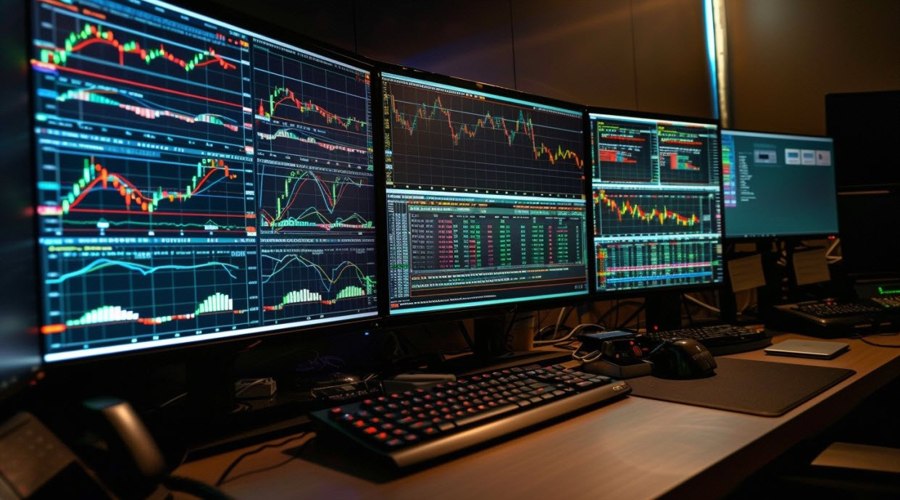
Prop trading firms provide traders with capital, meaning they do not need to invest their own money to participate in the markets. This enables traders to access larger positions and potentially greater returns compared to traditional retail trading. However, there are some key elements that differentiate prop trading from other trading styles:
- Access to Capital: One of the biggest advantages of crypto prop firm is the ability to trade with firm capital, which reduces the trader’s financial risk.
- Risk Sharing: Prop firms usually have a risk-sharing model where the trader keeps a percentage of the profits, while the firm absorbs a portion of the losses.
- Leverage: Traders can often use leverage, allowing them to control larger positions with less capital. This increases potential profits but also amplifies risk.
- Advanced Tools: Traders in prop firms have access to sophisticated trading platforms, algorithms, and market research that can aid in making more informed decisions.
How Traders Maximize Profit in Prop Trading
Successful prop traders use a combination of strategies, market analysis, and disciplined risk management to generate profits. Here are some common ways they leverage capital effectively:
- Utilizing Leverage Wisely
Leverage is a key tool in prop trading. Traders can use borrowed capital from the firm to take larger positions than they would be able to with their own funds. This increases the potential for profit on smaller price movements. However, this also means that the risk is heightened. Prop traders need to have strong risk management skills to prevent substantial losses. - Risk Management
Proper risk management is essential in prop trading. Traders often use stop-loss orders, diversify their positions, and set profit targets to limit exposure. They also monitor market volatility to adjust their strategies accordingly. Prop trading firms often set risk limits to protect both the trader and the firm from large, unexpected losses. - Algorithmic and Quantitative Strategies
Many prop trading firms employ advanced algorithms to trade financial instruments. These systems use mathematical models to analyze market data and execute trades at optimal times. Traders in these firms may rely on quantitative analysis to guide their decisions, ensuring that trades are based on data rather than emotion or speculation. - Market Research and Technical Analysis
In addition to algorithms, professional traders often rely on market research and technical analysis. They analyze historical data, price patterns, and market trends to identify trading opportunities. Technical analysis helps traders make informed decisions by studying past market movements and indicators such as moving averages and relative strength indexes (RSI). - Profit Sharing
one of the key incentives for prop traders is the profit-sharing model. Traders typically receive a percentage of the profits they generate, which motivates them to perform at their best. While the firm keeps a portion of the earnings, traders can earn significantly if they consistently make profitable trades.
Conclusion
Prop trading offers a unique opportunity for professional traders to maximize profits by leveraging firm capital and advanced tools. With access to larger positions, sophisticated strategies, and a well-managed risk framework, traders can amplify their returns. However, the model also requires discipline and the ability to navigate market risks effectively. By combining proper leverage, risk management, and data-driven strategies, traders in prop trading firms can succeed in generating substantial profits while minimizing potential losses.